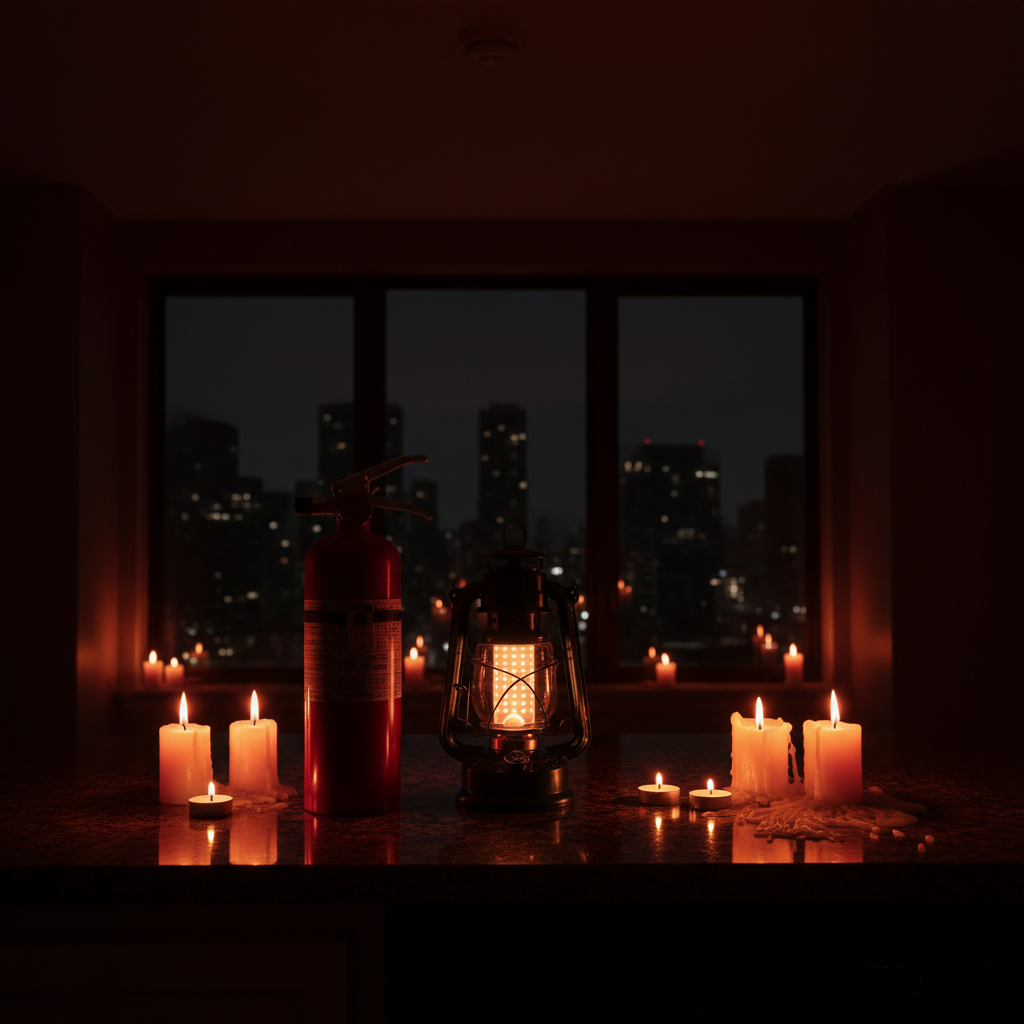
Power outages and fire risk go hand in hand. When the grid fails, people turn to candles for light, camp stoves for cooking, and portable heaters for warmth. The result? Fire departments see a 40% spike in residential fires during major blackouts, according to NFPA data from recent hurricanes and winter storms.
In an apartment building, one person's mistake can become everyone's emergency. A kitchen fire on the third floor doesn't care about your carefully stored preps. Smoke travels through shared ventilation. Sprinkler systems may be disabled if the building loses water pressure. And evacuation means navigating dark stairwells with hundreds of neighbors.
This guide covers fire safety specifically for urban preppers during grid-down scenarios: prevention strategies, detection systems that work without power, escape planning for high-rise living, and renter-friendly fire suppression tools.
Quick Answer
Quick answer: To stay fire-safe in a blackout, swap candles for battery LED lanterns, never run grills, camp stoves, or fuel heaters indoors or on a balcony, and cook only with enclosed-space options like butane or Sterno stoves near a cracked window. Keep a battery smoke/CO detector, an ABC fire extinguisher near the kitchen, and a fire escape ladder if you live above the 2nd floor — and map two ways out of every room before you need them.
Why Blackouts Increase Fire Risk
When electricity fails, survival instincts kick in. Unfortunately, some common blackout coping strategies create new hazards:
- Candle use increases 300% during extended outages. Unattended candles cause 7,600 home fires annually in normal conditions.
- Alternative cooking with camp stoves, grills, or Sterno cans indoors produces open flames in spaces never designed for them.
- Portable heaters (especially fuel-burning ones) are the leading cause of fatal house fires during winter outages.
- Generator misuse inside apartments or on balconies creates both CO poisoning and fire risks from fuel handling.
- Electrical overloads when power returns—everyone plugging in devices simultaneously can spark outlet fires.
The Deadly Mistake
Never use your balcony or patio for grilling, camp stoves, or generators during an outage. Embers can blow to upper floors. Propane leaks pool in enclosed spaces. And apartment fire codes explicitly prohibit open flames on balconies for good reason.
Fire Prevention: The First Layer
Safer Lighting Alternatives
Eliminate candle dependence entirely. Modern LED lanterns provide 360-degree illumination for 100+ hours on a set of batteries. Headlamps free your hands for cooking tasks. And battery-powered "candles" provide ambiance without the open flame.
Vont 4-Pack LED Camping Lantern
140 lumens, 90-hour runtime on 3 AA batteries. Collapsible design for storage. Non-slip rubber grip. Essential for apartment blackout kits.
Some links below are affiliate links. As an Amazon Associate we earn from qualifying purchases, at no extra cost to you. We only recommend gear we’d actually use.
View on Amazon →Black Diamond Spot 400-R Headlamp
400 lumens max, red light mode for night vision, rechargeable via USB. Waterproof to 1 meter. Hands-free cooking and navigation in dark apartments.
View on Amazon →Safe Indoor Cooking Methods
If you must cook indoors during an outage, use options designed for enclosed spaces:
- Sterno folding stoves use gelled alcohol fuel that burns clean. Stable base, no pressurized fuel. One can boils 4 cups of water in 8 minutes.
- Butane cartridge stoves (like Iwatani or GasOne) have auto-shutoff features and stable pot stands. Use near a cracked window for ventilation.
- Thermos cooking—boil water with any method, pour into a wide-mouth insulated bottle with your food, seal for 2-4 hours. Zero fire risk after initial boil.
Sterno 50106 Outdoor Folding Camp Stove
Folds flat for storage. Uses standard Sterno cans (6-hour burn time). Stable enough for 2-quart pot. Renter-friendly—no installation.
View on Amazon →Clear the Combustion Zone
Maintain a 3-foot radius of clear space around any heat source:
- Move curtains, bedding, and paper away from windows where candles might be placed
- Keep clothing and towels away from cooking areas
- Never charge devices on beds or upholstered furniture—lithium battery fires start small and grow fast
- Store flammable preps (alcohol, propane, fuel tablets) in metal containers away from heat sources
Early Warning Systems
Smoke Detectors That Work Without Power
Hardwired smoke detectors won't function during outages unless they have battery backup. Test yours monthly. If the backup battery is dead or missing, replace it immediately.
For apartments with questionable maintenance, supplement with battery-powered units you control:
Kidde Smoke & Carbon Monoxide Detector
Battery-powered (AA), voice alerts specify "Fire!" or "Carbon Monoxide!" 10-year sensor life. Interconnectable—when one sounds, they all sound.
View on Amazon →The Baking Soda Fire Extinguisher
For small kitchen fires, baking soda smothers flames effectively. Keep a large box near your cooking area. It works on grease fires (never use water on grease fires—it explodes), small fabric fires, and electrical fires under 110V.
Label it "FIRE" with a permanent marker so others know its purpose.
Renter-Friendly Fire Suppression
Most landlords prohibit permanent fire suppression installations. But you can legally and safely add:
First Alert HOME1 Rechargeable Fire Extinguisher
ABC rated for all fire types (trash, wood, paper; liquids; electrical). Rechargeable after use. Mounting bracket included. UL listed.
View on Amazon →Tundra Fire Extinguishing Spray (4-Pack)
Aerosol-style extinguisher—no training needed. 4x discharge time of traditional extinguishers. Biodegradable formula. Stores in kitchen drawer.
View on Amazon →Emergency Fire Blanket (2-Pack)
100% fiberglass, no expiration date. Pull tabs for instant deployment. Smothers small fires on people, clothing, or surfaces. Stores flat.
View on Amazon →Escape Planning for Urban Preppers
The Two-Way Rule
Every room needs two ways out. Map yours:
- Primary route: Main door to stairwell (never elevator during fires)
- Secondary route: Window to fire escape, adjacent room, or (ground floor) direct exit
If you live above the 2nd floor, a fire escape ladder is non-negotiable. Collapsible ladders store under beds and deploy in seconds. See our full guide to choosing a fire escape ladder for a 2nd- or 3rd-floor apartment for how to measure and which models fit renters.
Kidde Fire Escape 2-Story Ladder
25-foot length for 2nd-3rd floor windows. Anti-slip rungs. Supports 1,000 lbs. No tools needed—hooks over window sill. Practice deploying it.
View on Amazon →Stairwell Navigation in the Dark
During blackouts, stairwell emergency lighting may fail. Keep these items by your door:
- Headlamp (hands-free stair descent)
- N95 masks (smoke inhalation protection)
- Light-colored towel (signal to firefighters, wet for smoke filtration if needed)
- Portable radio (monitor if fire is contained to specific floors)
The Wet Towel Technique
If smoke fills the hallway, seal your door with wet towels at the bottom gap. Place tape over vents if possible. Signal firefighters with a flashlight or bright cloth at the window. Stay low—smoke rises, and cleanest air is near the floor.
The Rally Point
Designate a meeting spot outside your building—parking lot corner, nearby park, across the street. Everyone in your household should know it instinctively. This prevents dangerous "re-entry" attempts to find someone who's already out.
Communication During Fire Emergencies
Cell towers may be overwhelmed during major fires. Backup communication options:
- NOAA weather radio—many double as emergency alert receivers
- FRS/GMRS radios—coordinate with neighbors on predefined channels
- Fire whistle—3 sharp blasts signal "fire, evacuate now" to your floor
LEVEL UP YOUR FIRE SAFETY
Basic fire extinguishers handle small incidents. But what if the fire spreads while you're sleeping? What if you're trapped? These upgrades add layers of protection:
First Alert Smoke Detector Network
Interconnected wireless detectors. When one triggers, all sound. Covers bedrooms, living areas, and hallway.
Shop Interconnected Detectors →Ready America 72-Hour Deluxe Kit
Includes emergency whistles, glow sticks for signaling, and N95 masks for smoke filtration during evacuation.
View Kit Contents →Grid-Down Survival Guide
Complete apartment preparedness manual. Fire safety is just one chapter—covers water, food, medical, security, and long-term survival.
Get the Guide →Join 1,000+ Urban Preppers
Get weekly survival tips designed for urban dwellers. No spam, unsubscribe anytime.
Frequently Asked Questions
Why do apartment building fires increase during power outages?
Blackouts push residents to use candles, camp stoves, and improper heating sources — all major fire risks. Simultaneously, electric fire alarm systems may lose power, sprinkler system pumps may fail, and elevator-dependent firefighting access is compromised. Risk is highest in the first 48 hours of a major outage.
How do I reduce fire risk in my apartment during a blackout?
Key rules: never use gas camp stoves, grills, or open-flame heating indoors. Use battery-powered LED lights instead of candles. Keep a fire extinguisher accessible. Know two exit routes and confirm stairwell access. Test your battery-backup smoke detector before an outage.
What fire safety gear should apartment renters keep on hand?
Essentials: a 2.5-5 lb ABC dry chemical fire extinguisher mounted near the kitchen, battery-powered smoke detectors on every floor tested monthly, and a CO detector. Optional: an escape ladder for units above the 2nd floor, and a fire blanket for kitchen fires.
Is it safe to use candles during a power outage?
No. Candle use jumps roughly 300% during extended outages, and unattended candles already cause about 7,600 home fires a year under normal conditions. Replace them entirely with battery-powered LED lanterns, which give 360-degree light for 100-plus hours, plus headlamps for hands-free cooking and navigation in the dark.
How do you put out a grease fire when the power is out?
Never use water on a grease fire, since it makes the burning oil explode. Smother small grease fires with a large box of baking soda kept near your stove, slide a lid over the pan, or drop a fiberglass fire blanket on it. Keep an ABC-rated extinguisher within reach for anything that spreads.
Do you need a fire escape ladder if you live on the third floor?
Yes. For any unit above the 2nd floor a collapsible escape ladder is essentially non-negotiable, because stairwells can fill with smoke and elevators are unusable in a fire. A 25-foot two-story ladder hooks over the window sill with no tools, supports up to 1,000 lbs, and stores flat under a bed. Practice deploying it before an emergency.