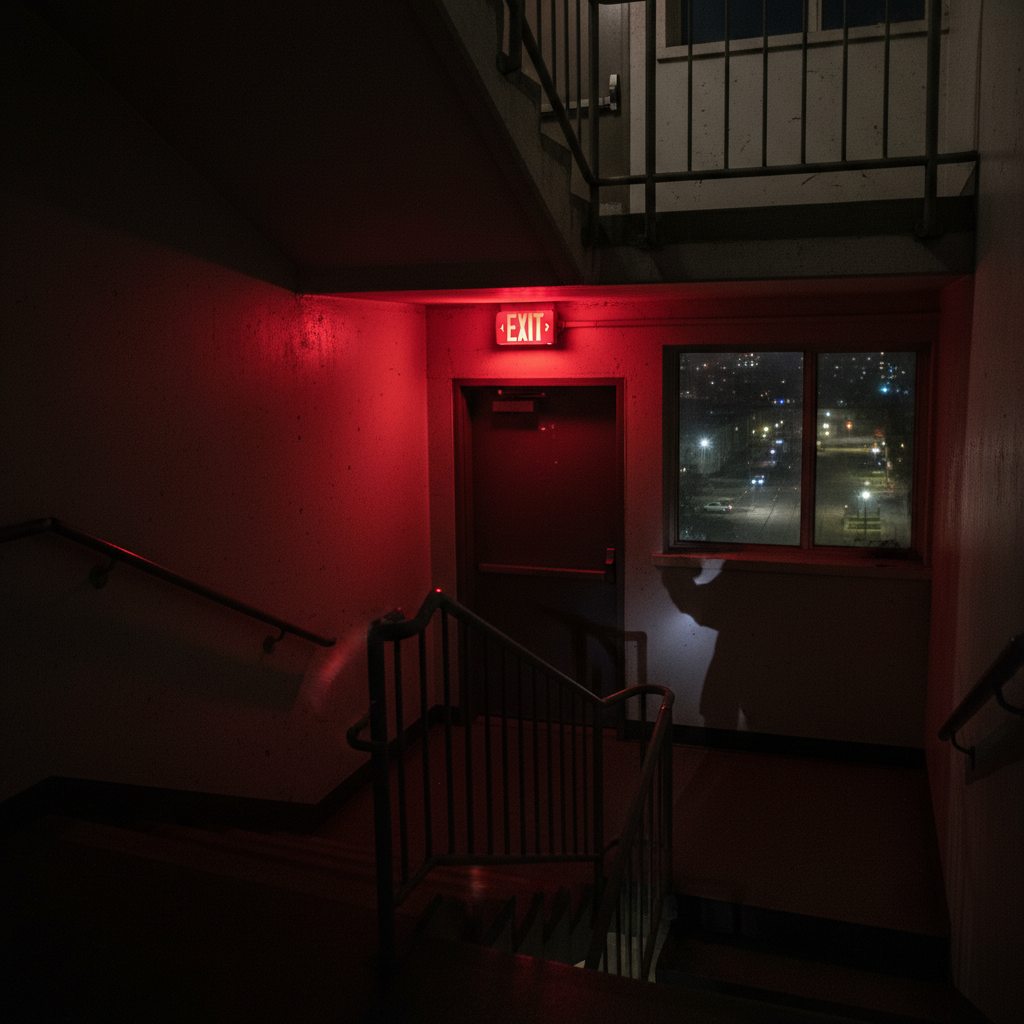
There's a reason the U.S. Fire Administration defines "high-rise" as any building over 75 feet. Once you live above the reach of fire department ladders — typically the 7th or 8th floor — your emergency strategy fundamentally changes. The stairs become your only exit. The elevator becomes a steel box you avoid. And the decision to evacuate versus shelter-in-place carries life-or-death weight.
I live on the 23rd floor. During a blackout last winter, I watched neighbors try to "just run down for coffee" and return 45 minutes later, sweating and shaking. Another floor, another reality. If you're a high-rise dweller, you need a plan that accounts for vertical distance.
Quick Answer
Quick answer: In most high-rise blackouts, sheltering in place is safer than evacuating, because dark stairwells are physically demanding and elevators lock down. Evacuate only when fire is on your floor or above you, you smell smoke, authorities order it, or the building becomes uninhabitable. Store at least 7 days of water, keep a 200+ lumen headlamp, and know your stairwell locations before you ever need them.
The High-Rise Reality Check
Most urban preppers underestimate how different high-rise emergencies are from single-family home scenarios. Here's what changes:
- Elevators lock down. Fire safety systems automatically shut off elevators during emergencies. You're taking the stairs — all of them.
- Evacuation takes time. Descending 20+ floors in a crowded stairwell isn't a 5-minute trip. Budget 30-60 seconds per floor minimum.
- Smoke travels vertically. Stairwells are designed as smoke towers. If fire is below you, the stairs may be impassable.
- You're dependent on building systems. Emergency lighting, PA announcements, and fire suppression depend on backup power that may fail.
- Exits are limited. Most high-rises have only 2-3 stairwells for hundreds of residents. Bottlenecks happen fast.
NFPA Definition
The National Fire Protection Association defines high-rise buildings as those over 75 feet from the lowest level of fire department vehicle access to the highest occupiable floor. For context, that's roughly 6-7 stories. If you live higher than that, these protocols apply to you.
Shelter-in-Place vs. Evacuate: The Decision Framework
In a high-rise, evacuation isn't always the right choice. Sometimes staying put is safer than descending through danger. Here's how to decide:
Shelter-in-Place When:
- Fire or hazard is below your floor
- Stairwells are smoke-filled or impassable
- You're physically unable to descend safely
- Authorities instruct you to stay put
- The threat is external (civil unrest, hazmat) and your unit is secure
Evacuate Immediately When:
- Fire is on your floor or above you
- You smell smoke inside your unit
- Fire alarm is sounding and you see no smoke (evacuate before it spreads)
- Authorities order evacuation
- The building structure is compromised
The key discipline: don't wait to see if it gets worse. High-rise fires can double in size every 60 seconds. By the time you see flames, you may have already lost your window to evacuate safely.
Stairway Evacuation: Technique Matters
When you do descend, technique and preparation determine whether you make it out safely — or become another casualty statistic.
The Right-Hand Rule
Stay to the right side of the stairwell, keeping the center clear for firefighters moving up. This isn't etiquette — it's life safety protocol. Firefighters in full gear need space to pass. Stay right, move steadily, don't stop on landings.
Count Floors, Not Steps
In smoke or darkness, you may not be able to see floor numbers. Count landings instead. Each full landing is one floor. If you're on the 23rd floor and need to reach the lobby, you're counting down 22 landings. Mental math keeps you oriented when visibility drops.
Assisting Others
High-rise buildings have designated "areas of refuge" or fire-rated refuge floors where people who cannot use stairs should wait for rescue. If you encounter someone who needs assistance:
- Help them reach the nearest refuge area if one floor away or less
- Otherwise, note their location (floor, stairwell) and notify firefighters immediately upon exiting
- Never compromise your own evacuation to help — you become two casualties instead of one
Stairway Go-Bag Modifications
- High-lumen headlamp (200+ lumens) — hands-free stair descent
- N95 masks — smoke inhalation protection
- Whistle — signal for help if trapped
- Glow sticks — mark location without batteries
- Compact shoes — your evacuation footwear if caught in dress shoes
- Water bottle — dehydration during extended stair descent
- Emergency blanket — hypothermia protection if stranded
When Elevators Become Death Traps
During a blackout or fire, elevators may stop between floors, trap occupants, or open onto smoke-filled hallways. Never use elevators during:
- Fire alarms
- Power outages
- Earthquakes
- Any announced emergency
If you're in an elevator when it stops: press all floor buttons, use the emergency call button, and wait for rescue. Do not attempt to pry doors or climb out. Modern elevators have battery-backed emergency lighting and ventilation designed for hours of entrapment.
Communication Without Cell Service
High-rise buildings act as Faraday cages. Stairwells are often dead zones. Emergency communication requires alternatives:
- Walkie-talkies — FRS/GMRS radios work building-wide if others have matching units
- Mesh networks — goTenna or similar devices create off-grid texting networks
- Building PA systems — listen for announcements, but verify independently
- Window signals — if trapped, signal rescuers with flashlight, mirror, or bright cloth
Coordinate with neighbors beforehand. If you have a group on the same radio channel or mesh network, you can share information about stairwell conditions, smoke locations, and safe routes.
Building Relationships That Save Lives
In a high-rise emergency, your neighbors are your first responders. Build these relationships before you need them:
- Know your floor warden. Many buildings designate residents as floor wardens responsible for checking units and reporting to building management.
- Identify who needs help. Elderly neighbors, people with mobility limitations, families with infants — know who may need assistance.
- Share contact information. Create a floor contact list for emergencies.
- Practice together. Propose a floor evacuation drill. If management won't organize it, do it informally.
Level Up Your High-Rise Prep
These products address the unique challenges of vertical evacuation and shelter-in-place scenarios:
Black Diamond Spot 400-R Headlamp
400 lumens, rechargeable, red night-vision mode. Essential for hands-free stair descent in darkness. The red mode preserves your night vision while navigating smoke-filled stairwells.
Some links below are affiliate links. As an Amazon Associate we earn from qualifying purchases, at no extra cost to you. We only recommend gear we’d actually use.
View on AmazonMidland GXT1000VP4 Two-Way Radios
36-mile range, 50 channels, NOAA weather alerts. Coordinate with neighbors across floors when cell towers fail or networks jam. Waterproof and durable for emergency use.
View on AmazonReady America 72-Hour Deluxe Kit (4-Person)
72-hour kit for 4 people with food, water, first aid, and warmth. Perfect for shelter-in-place scenarios when evacuation isn't possible. Compact storage for apartment closets.
View on AmazonGrid-Down Survival Guide (Ebook)
Comprehensive 150+ page guide covering high-rise emergencies, blackout protocols, and urban survival strategies. Instant download, works offline when you need it most.
Get the Guide — $19.99Rehearse Your Plan Before You Need It
Knowing your building's emergency procedures isn't enough. You need muscle memory. Once per quarter:
- Walk your primary and secondary evacuation routes
- Time your descent from your floor to the street
- Locate all stairwell entrances on your floor
- Identify the nearest area of refuge if your building has one
- Test your emergency lighting and communication gear
- Review your go-bag contents and replace expired items
High-rise living offers spectacular views and urban convenience. But it also demands respect for vertical distance. When the alarm sounds and the elevators stop, your preparation determines whether you become a survivor or a statistic.
Don't wait for the drill. Map your routes. Build your kit. Know your neighbors. And remember: in a high-rise, the best time to prepare was before you moved in. The second-best time is today.
Get the Complete Blackout Protocol
Our 150+ page Grid-Down Survival Guide includes detailed high-rise evacuation procedures, shelter-in-place checklists, and communication protocols when everything fails. Download it now and be ready before the next emergency.
Get the Guide — $19.99