Your landlord won't let you run a generator. Your neighbors will call the super if you try. That doesn't mean you're stuck in the dark when the grid goes down — it means you need a portable power station.
Unlike gas generators, portable power stations are 100% indoor-safe. No exhaust. No noise complaints. No lease violations. You plug them in to charge, and when the grid fails, they silently power your essentials for hours — sometimes days.
I tested and researched the top picks at every price point, specifically for urban preppers. Here's what actually makes sense for your situation.
Quick answer: The best portable power station for an urban blackout is the Jackery Explorer 300 (~$199) for most apartments — 292 Wh of LFP capacity runs a CPAP, lights, and devices through a full 24-hour outage silently and indoors with no exhaust. On a tight budget, the EcoFlow River 2 (~$199) charges in 60 minutes; for CPAP users or 2-day coverage, step up to the EcoFlow River 2 Pro (768 Wh, ~$399).
Why Portable Power Stations Beat Generators for Apartments
Before we rank the options, let's be clear on why this category matters so much:
- No emissions — gas generators produce carbon monoxide; power stations are zero-emission
- Dead silent — no engine noise, no vibration through your floor
- Legal — no lease clause bans a power bank; many do ban generators
- Rechargeable via solar — if you have a balcony or south-facing window, you can extend runtime indefinitely
- Multi-purpose — use them camping, at festivals, in your car — not just emergencies
The tradeoff: they cost more upfront than a cheap generator and can't power 240V appliances like central AC or electric stoves. But for everything you'd actually need in a blackout? They're perfect.
Quick sizing guide: 1 Wh powers roughly 1 watt for 1 hour. A smartphone uses ~5W. A CPAP machine uses 30–60W. A mini-fridge uses ~60W. A laptop uses 45–65W. Add up your critical devices, then pick a station with 2–3× that capacity for buffer.
Quick Comparison
| Model | Capacity | Output | Solar Input | Best For |
|---|---|---|---|---|
| EcoFlow River 2 | 256 Wh | 300W | 110W max | Essential devices, budget pick |
| Jackery Explorer 300 | 292 Wh | 300W | 100W max | Best beginner station |
| EcoFlow River 2 Pro | 768 Wh | 800W | 220W max | CPAP users, 2-day coverage |
| Jackery Explorer 1000 v2 | 1,070 Wh | 1,500W | 400W max | Power-hungry setups, families |
| EcoFlow River 3 Plus | 286 Wh | 600W | Supported | Bedside UPS, always-on gear |
Our Top Picks
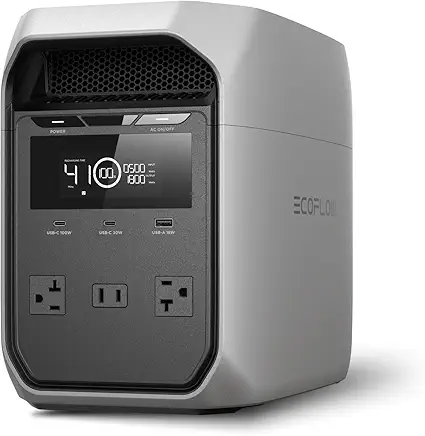
The River 2 is the entry point that actually works. At under $200, it'll charge your phone 20+ times, run a CPAP for one night (EPAP mode), keep a small fan running for 5+ hours, and power LED lights all evening. Its 60-minute charge time is a standout — you can top it off every day "just in case" without thinking about it.
- Charges from 0–100% in just 60 minutes
- LFP (lithium iron phosphate) battery — 3,000+ charge cycles
- App control via Bluetooth
- Compact: fits under a desk or in a closet
- Only 256 Wh — 1 night of heavy use
- Not enough for a full-size mini-fridge over 24h
Some links below are affiliate links. As an Amazon Associate we earn from qualifying purchases, at no extra cost to you. We only recommend gear we’d actually use.
View on Amazon →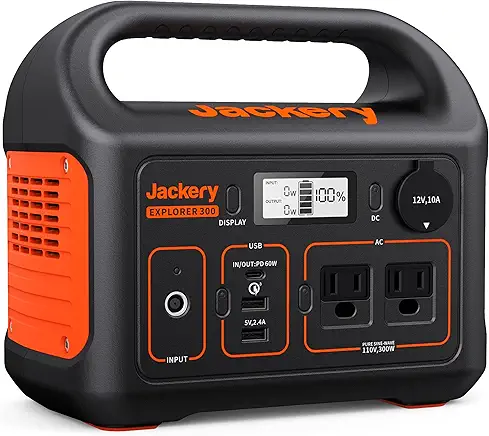
Jackery has been the gold standard in portable power for years — and the Explorer 300 earns it. With 292 Wh and a 300W inverter, you can run a CPAP machine, charge all your devices, and keep lights on for a full 24-hour blackout. The LFP battery chemistry means it'll last 10 years of regular use. Jackery's track record for reliability and customer support is unmatched in this category.
- LFP battery — 3,000+ cycles, 10-year lifespan
- Lightweight at 6.8 lbs — easy to move room to room
- Pairs with SolarSaga 100W panel for indefinite runtime
- Industry-leading reliability and warranty support
- Slower charge time than EcoFlow (1.8 vs 1.0 hours)
- No app control (basic but functional display)
For detailed guidance on sizing your power needs and building a layered apartment power system — including how to use these stations with solar panels on a balcony — Dark Reset covers the complete off-grid power setup for urban environments, including EMP-hardening strategies for your electronics.
If you use a CPAP, have a medical device, or just want real 2-day coverage for your whole apartment setup, the River 2 Pro is the sweet spot. 768 Wh handles two nights of CPAP, a mini-fridge for 10–12 hours, and keeps all your devices charged throughout. The 800W output handles a blender, an electric kettle, and most small appliances you'd want to run during an extended outage.
- True 2-day coverage for a 1-person apartment
- 800W output handles real appliances
- 70-min full charge — keep it topped off easily
- LFP battery, 3,000+ cycle lifespan
- 17 lbs — not as portable as the smaller units
- Premium price for a "just in case" purchase
For couples, families, or anyone serious about extended outage resilience, the Explorer 1000 v2 is the workhorse. 1,070 Wh means 3–4 days of phones, lights, and a small fan. It can run a mini-fridge non-stop for 15–18 hours. Pair it with two Jackery SolarSaga 200W panels on a balcony and you have a virtually indefinite indoor power supply.
- 1,070 Wh — actual multi-day coverage
- 1,500W output — handles fridges, fans, and CPAPs with ease
- Expandable with additional battery packs
- LFP cells, 4,000 cycle lifespan (industry-leading)
- 32 lbs — stays in one spot
- Premium price; needs budget commitment
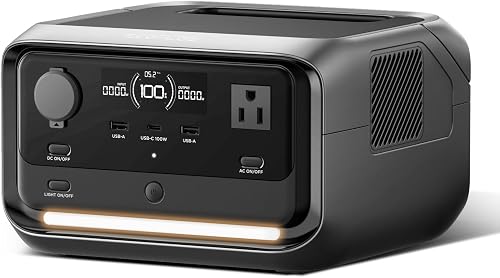
The River 3 Plus is the quiet workhorse of this list. Its LiFePO4 battery is rated for years of daily cycling, it recharges from the wall in about an hour, and its sub-10-millisecond UPS switchover means you can leave a CPAP, router, or fish tank plugged in and never notice a grid blip. At under 30 dB it's bedroom-friendly, and the capacity expands to 858 Wh with an extra battery when your needs grow.
- True UPS: <10 ms switchover for always-on gear
- LFP chemistry — long lifespan, safe indoors
- Expandable to 858 Wh — grows with your prep
- Mid-size capacity — about a day of careful use
- Costs more than entry-level 250 Wh units
Solar Panels: The Apartment Multiplier
Here's what most urban preppers overlook: a portable power station + a solar panel on your balcony turns a finite battery into a renewable daily power source. Even in a 3rd-floor south-facing window, a 100W panel can add 200–400 Wh per day depending on sun exposure.
That's enough to keep your EcoFlow River 2 at full charge every single day, indefinitely — even if the grid never comes back.
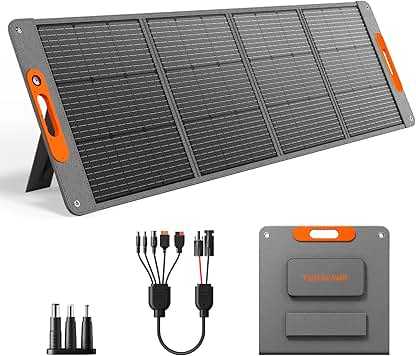
Folds flat like a briefcase. Deploy it on your balcony railing, clip it to a window sill, or lay it flat on outdoor furniture. Pairs natively with any Jackery Explorer station, but works with any station accepting MC4 or DC input. In direct sun, outputs 80–100W consistently.
View on Amazon →Which One Should You Buy?
| Your Situation | Pick | Capacity | Price |
|---|---|---|---|
| Bedside UPS / always-on gear | EcoFlow River 3 Plus | 286 Wh | ~$259 |
| Best all-around beginner | EcoFlow River 2 | 256 Wh | ~$199 |
| Reliability + longevity | Jackery Explorer 300 | 292 Wh | ~$199 |
| CPAP users / 2-day coverage | EcoFlow River 2 Pro | 768 Wh | ~$399 |
| Couples, families, serious preppers | Jackery Explorer 1000 v2 | 1,070 Wh | ~$469 |
- Tight budget, just starting out: EcoFlow River 2 (~$189) — real AC outlet, compact, gets you started
- Best all-around beginner: EcoFlow River 2 (~$199) — 60-min charge, proven LFP battery, handles 1-day coverage
- Best for reliability + longevity: Jackery Explorer 300 (~$199) — the gold standard name in this space, pairs perfectly with SolarSaga panels
- CPAP users / 2-day coverage: EcoFlow River 2 Pro (~$399) — medical-grade reliability, 768 Wh headroom
- Couples, families, serious preppers: Jackery Explorer 1000 v2 (~$469) — full multi-day independence, pairs with solar for indefinite power
Avoid NMC lithium-ion chemistry at the budget end. If a station under $150 doesn't specify LFP (lithium iron phosphate), it's likely NMC chemistry — shorter lifespan (500 cycles vs 3,000+), more heat-sensitive, and less stable. Pay a little more for LFP. You'll thank yourself in year 3.
What to Power First in a Blackout
When the grid goes down, run your power station in priority order — don't just plug in everything at once:
- Phone + radio — stay informed, maintain communication (5–10W, runs forever)
- LED lights — a string of LED lights draws 5–15W; critical for safety and morale
- CPAP or medical devices — non-negotiable if you need them (30–80W). See how to size a battery for a CPAP machine.
- Mini-fridge — only if blackout extends beyond 4 hours; runs 60–90W. Here's how to keep food cold and cycle a fridge off a power station.
- Laptop/tablet — work, entertainment, information access (45–65W)
- Fan — essential in summer (25–50W depending on size)
For the complete protocol — including hour-by-hour decisions during a major grid failure, how to stretch your power supply across 72+ hours, and what to do if your station runs out — the Urban Survival Code covers blackout response as a full chapter with decision trees built for urban preppers specifically.
The Bottom Line
The single biggest gap in most apartment prep kits is power. People buy flashlights and canned food — then discover their phone is dead on Day 2 and they have no idea what's happening outside.
A portable power station solves this completely. It's silent, safe, legal, and reusable. You can charge it every week as part of your routine and forget about it until you need it. And when the grid goes down at 11 PM on a February night, you'll be the person in your building whose lights are still on.
Start with whatever fits your budget. Even the EcoFlow River 2 at ~$189 is infinitely better than no backup power. Then add solar when you can. That's the apartment power stack that actually works.
As an Amazon Associate, we earn from qualifying purchases. Prices are approximate and subject to change.