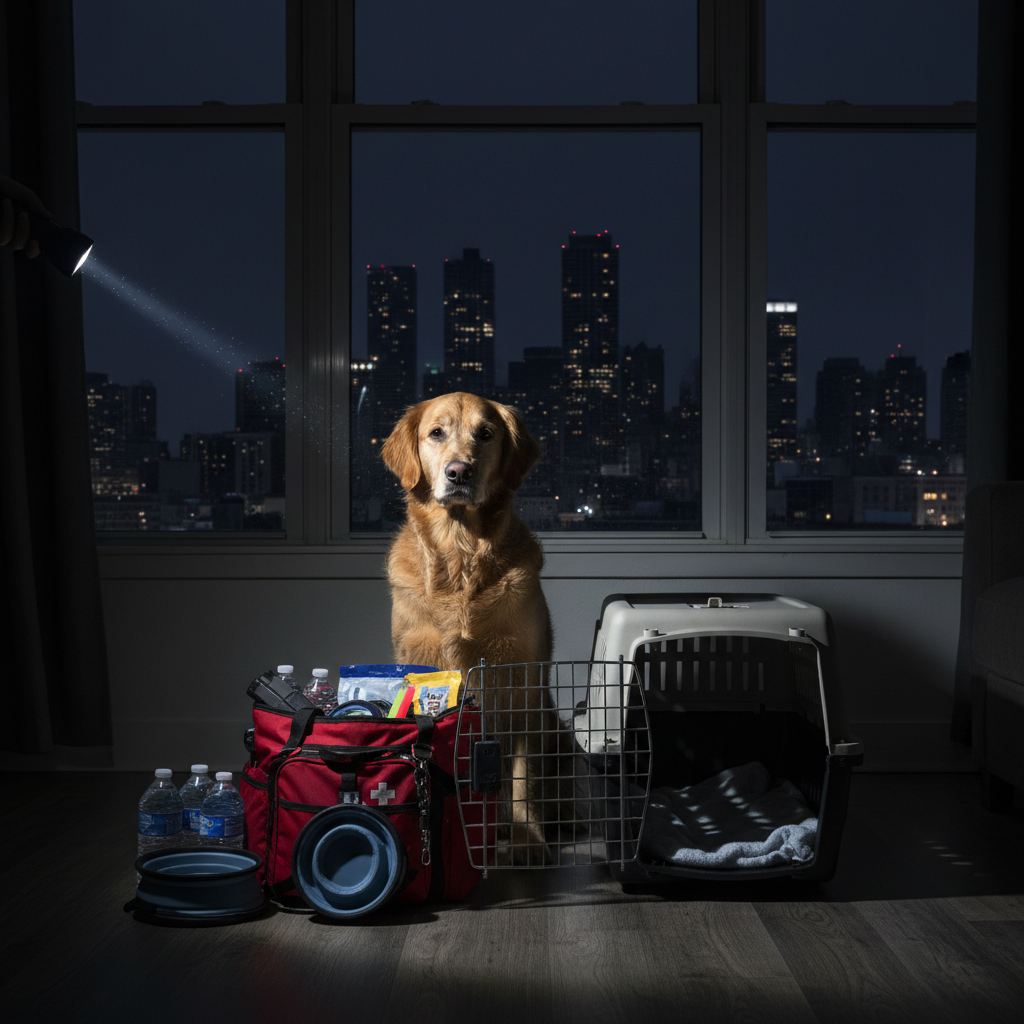
During Hurricane Katrina, an estimated 250,000 pets were left behind. Many died. Others were never reunited with their owners. In apartments—where you can't simply "let them out back"—pet preparedness isn't optional. It's a responsibility.
I've got a 60-pound dog in a 700-square-foot apartment. Here's the system I've built to ensure that if disaster strikes, my furry family member isn't an afterthought.
The Pet Go-Bag: Their Lifeline
Your pet needs their own emergency kit, separate from yours. Keep it by the door or in a pet backpack they can wear. Here's what goes inside:
- 3-7 days of food in vacuum-sealed bags (saves space, prevents spoilage)
- Collapsible silicone bowls that flatten when not in use
- Current photo of you WITH your pet—this proves ownership at shelters
- Copy of vaccination records—required at most pet-friendly shelters
- 2-week supply of medications—refills can be impossible during disasters
- Pee pads for dogs or a disposable litter box with litter for cats
- Backup leash and harness—in case the collar fails or gets lost
- Anxiety relief—Thundershirt, calming treats, or pet-safe CBD
The Outward Hound DayPak Dog Backpack lets your dog carry their own supplies. For cats, a pre-packed bag by the door works better.
The "Pets Inside" Alert System
If you evacuate and can't find your pet—or if you're not home when disaster strikes—first responders need to know animals are inside. Place pet alert stickers on your apartment door and windows. The ADT Pet Alert Stickers use static cling (no adhesive, landlord-friendly) and list the number and type of pets.
Update these stickers when you get a new pet or move. A sticker saying "2 cats" when you now have one dog wastes critical rescue time.
Water Math: Don't Forget the Pets
Dogs need approximately 1 ounce of water per pound of body weight daily. My 60-pound dog = 60 ounces, or roughly half a gallon per day. For a week, that's 3.5 gallons just for him.
Many preppers calculate water storage for humans and forget their pets. Don't make this mistake. Add your pet's needs to your water storage plan or keep a dedicated WaterBOB ready for bathtub filling.
The "No Pets Allowed" Shelter Problem
Most emergency shelters don't accept pets. Know your alternatives before disaster strikes:
- Pet-friendly hotels within 50 miles (check RedRover.org for lists)
- Boarding facilities that stay open during disasters—call ahead and ask their policy
- Friends or family outside your immediate area who can take your pet
- Veterinary offices that offer emergency boarding during evacuations
Have three options pre-identified. "I'll figure it out when it happens" is a plan for panic, not preparedness.
Apartment-Specific Pet Risks
Heat and Cold Extremes
Apartments lose climate control fast. In summer blackouts, heat rises—upper floors become death traps. Move to lower floors if possible. In winter, small pets may need warming packs. The Snuggle Safe Microwave Heating Pad stays warm for 10 hours without electricity.
The Vertical Evacuation Challenge
If elevators are disabled and you're waiting for rescue, can you carry your pet down stairs? Practice this. My dog can descend 10 flights on leash; anything higher and I'd need a sling. For cats, a sturdy PetLuv Cat Carrier with a shoulder strap makes carrying manageable.
Noise Control and OPSEC
Stressed pets become vocal. In close-quarters apartment living, barking or crying draws attention—potentially unwanted attention. Train a "quiet" command. Have calming treats ready. Consider this in your stealth prepping strategy.
Microchip and ID: The Permanent Backup
Collars fall off. Leashes break. Microchips don't. Ensure your pet's microchip registration has:
- Your current phone number
- An out-of-state emergency contact (local contacts may face the same disaster)
- Your pet's current photo
Have a collar ID tag with your phone number and "Needs medication if found"—even if they don't. It increases the chance someone will contact you quickly.
Carrier Training for Cats (Critical)
If your cat only sees the carrier for vet visits, they associate it with trauma. In an evacuation, "can't get the cat in the carrier" is a dangerous delay.
Fix this: Leave the carrier out with a soft blanket inside. Toss treats in randomly. Make it a safe space, not a signal of doom. The Petmate Two-Door Top-Load Carrier makes loading easier than front-loading designs.
The Emotional Component
Pets sense your stress. When you're panicking, they panic. The best thing you can do for your pet in a disaster is stay calm. Practice your 2-minute evacuation drill so many times that when adrenaline hits, you're executing a familiar routine—not improvising.
Level Up Your Pet Preparedness
These upgrades take your pet's emergency readiness from basic to bulletproof:
Sustain Supply Emergency Kit
4-person, 72-hour kit with pet supplies included. Water, food, first aid.
Pet First Aid Kit
100-piece kit with pet-specific supplies: bandages, tweezers, tick remover, emergency blanket.
Grid-Down Survival Guide
Our comprehensive 182-page ebook. Chapter 12 covers pet preparedness in detail.
Get the Pet Preparedness Checklist
Join our newsletter and get a downloadable PDF checklist for dogs and cats, plus evacuation planning templates.