Most prepper gear guides assume you have thousands to spend and acres to store it all. This guide is different: everything fits under your sink, in a closet, or on a bookshelf, and costs less than a single car payment.
🎯 What this system covers:
72 hours of power, water, food, communication, and basic security for 1-2 people in an apartment setting. Everything prioritized by importance and tested for space efficiency.
The Philosophy: Tiers Over Totality
Here's the trap most preppers fall into: they buy nothing until they can afford "the perfect system." Meanwhile, the grid goes down and they're sitting in the dark with zero backup.
Better approach: Build in tiers. Get the $200 essentials now, upgrade to $500 when you can, scale to $1,000+ over time. Each tier keeps you alive longer.
The $200 Breakdown
📊 Budget Allocation
| Category | Budget |
| 💡 Power & Light | $50 |
| 💧 Water Storage & Purification | $45 |
| 🍝 Food & Cooking | $60 |
| 📡 Communication | $25 |
| 🛡️ Security & First Aid | $20 |
| Total | $200 |
💡 Tier 1: Power & Light ($50)
When the grid fails, your first problem is darkness. Your phone dies. Your freezer thaws. You can't charge anything. Here's the bare minimum that actually works:
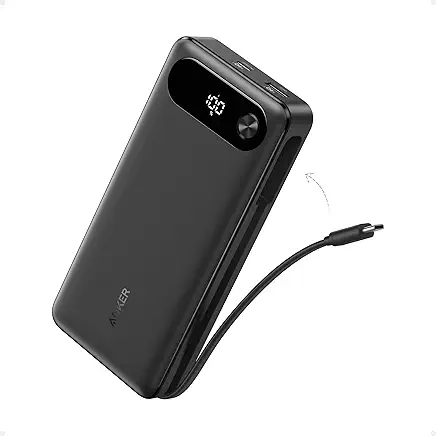
Why this matters: 4-5 full phone charges. Enough to keep communication alive for 3-4 days if you're conservative. USB-C fast charging means you can top up quickly when power returns.
Specs: 20,000mAh | Dual ports | LED indicator | Fits in pocket
🔗 View on Amazon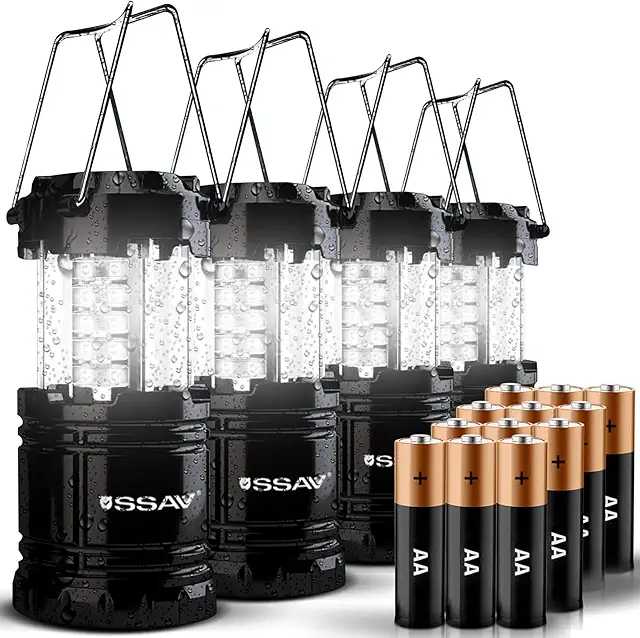
Why this matters: 90+ hours runtime on a set of batteries. Collapsible, so they store flat. Bright enough to light an entire room, but you can dim them to conserve.
Specs: 140 lumens | AA batteries (not included) | Collapsible | 4-pack
🔗 View on Amazon⚠️ Battery Reality Check:
You'll need AA batteries for the lanterns. Add $10-15 for a 24-pack of Duracell or Energizer. Yes, this pushes you slightly over $50, but it's non-negotiable—lanterns without batteries are paperweights.
💧 Tier 2: Water Storage & Purification ($45)
Rule of thumb: 1 gallon per person per day minimum. That's drinking, cooking, and basic hygiene. For 2 people over 3 days, you need 6 gallons stored + a way to purify more if needed.
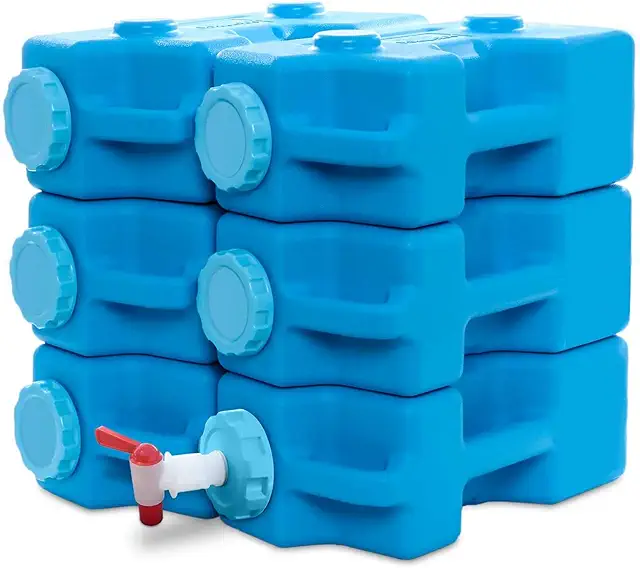
Why this matters: Stackable means they fit in closets, under beds, or behind furniture. BPA-free, food-grade. The handle makes them portable if you need to evacuate.
Specs: 7 gallons total | Stackable | Handle | 2-pack
🔗 View on Amazon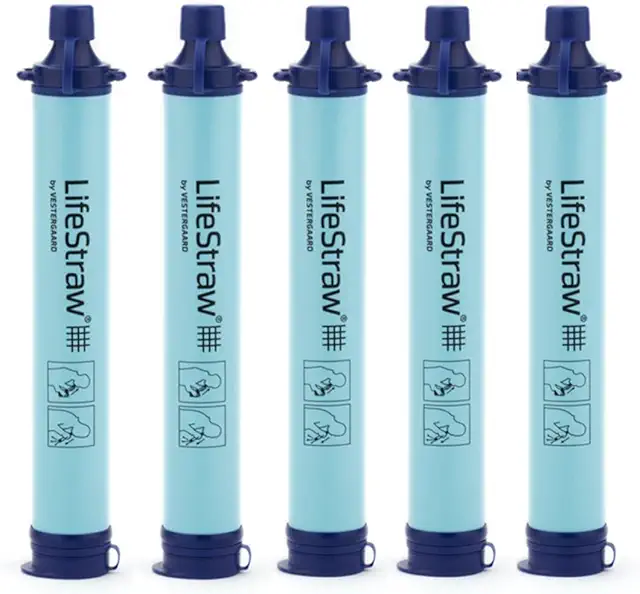
Why this matters: Filters 1,000 gallons. If your stored water runs out, you can purify from questionable sources (bathtub, rain collection, even puddles in emergencies).
Specs: Removes 99.9% bacteria/parasites | 1,000-gallon capacity | Lightweight
🔗 View on Amazon💡 Pro Tip: Fill your bathtub the moment you hear a storm/emergency warning. That's 40-60 gallons of backup water even if you didn't prep. Use a WaterBOB liner ($30) if you want to keep it sanitary.
🍝 Tier 3: Food & Cooking ($60)
Forget freeze-dried meals—they're expensive and require water you might not have. Focus on ready-to-eat, calorie-dense options that don't need prep.
Food ($40)
- Canned protein: Tuna, chicken, beans ($15 = ~12 cans)
- Peanut butter: High calories, long shelf life ($5 for 2 jars)
- Crackers/hardtack: Carbs for energy ($5)
- Trail mix/nuts: Portable, no-cook calories ($10)
- Energy bars: Clif, KIND, or similar ($5 for 6-pack)
⚠️ Rotation is key: Eat and replace these every 6-12 months. This isn't "doomsday food," it's normal groceries you're cycling through. No waste, no expired stockpiles.
Cooking ($20)
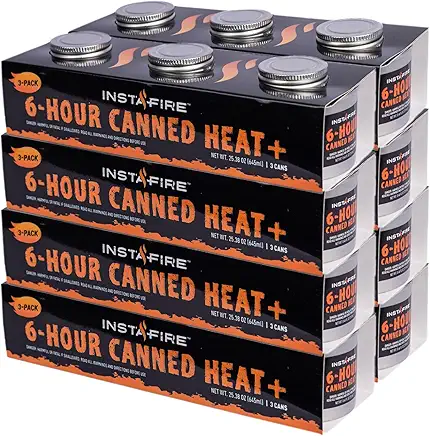
Why this matters: Apartment-safe. No open flame, minimal smoke. Each can burns for 2+ hours. Enough to heat water, warm canned food, or cook basic meals.
Specs: Burns 2+ hours each | Safe indoors (ventilate!) | 6-pack
🔗 View on AmazonNote: You'll need a camp stove or improvised stand to hold pots over Sterno. A $10 folding camp stove works, but in a pinch, you can use bricks or cans to elevate cookware.
📡 Tier 4: Communication ($25)
Cell towers fail. Wi-Fi dies. You need a way to get information and stay connected beyond your smartphone.
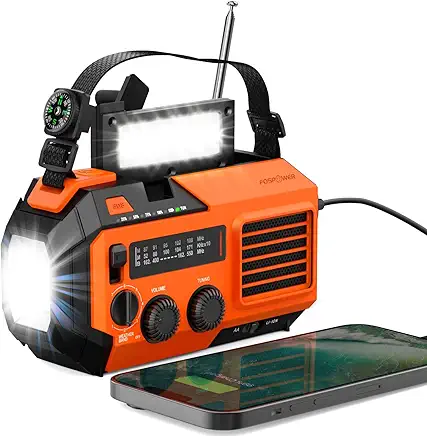
Why this matters: AM/FM/NOAA weather alerts. Solar + hand crank + battery means it works even when everything else fails. Bonus: USB port can charge your phone (slowly).
Specs: 3 power sources | Weather alerts | Phone charger | Flashlight
🔗 View on Amazon📱 Phone Strategy: With the Anker power bank + emergency radio backup, you can keep one phone alive for 5-7 days if you use airplane mode aggressively. Turn it on once per hour to check for signal.
To understand what a real extended grid-down event looks like—and how to prepare for one that lasts weeks, not days—Dark Reset covers grid infrastructure vulnerabilities, EMP preparedness, and the full recovery playbook for urban residents.
🛡️ Tier 5: Security & First Aid ($20)
In a 72-hour scenario, major injuries are unlikely, but minor cuts, burns, and headaches are guaranteed. Plus, you need basic security awareness.
First Aid ($15)
- Small first aid kit (bandages, gauze, antiseptic, pain relievers)
- Add: Imodium (diarrhea can kill you faster than hunger)
- Add: Benadryl (allergic reactions)
Security ($5)
- Door wedge: $5 rubber wedge makes forced entry much harder
- Alternative: Battery-powered door alarm ($10-15 if you can stretch budget)
⚠️ Apartment Security Reality: You can't fortify like a homeowner. Focus on deterrence and awareness. A loud alarm buys you time to call for help or barricade. That's usually enough.
The $200 System in Action
Scenario: It's 9pm on a Tuesday. Lightning hits a transformer. Power goes out city-wide. Your building has no backup generator. Here's what happens:
- Hour 1: You grab one of the LED lanterns from under the sink. Light the living room. Check phone: 80% battery. Turn on airplane mode. Use emergency radio to tune into local news.
- Day 1: Use stored water for drinking. Heat a can of soup on Sterno for dinner. Phone still at 75% thanks to airplane mode. Neighbors knock—you lend them a lantern, become the hero of your floor.
- Day 2: Water holding steady. Eat peanut butter crackers for breakfast, canned tuna for lunch. Charge phone with power bank at night (back to 100%). Radio says power restoration in 24-48 hours.
- Day 3: Power returns at 2pm. You still have 3 gallons of water, half your food, and 2 phone charges left in the power bank. You were never in danger.
✅ The difference: Your neighbors were eating melted ice cream by candlelight with dead phones, wondering when help would come. You were comfortable, informed, and in control.
Beyond $200: What to Add Next
Once you've built the foundation, here's how to upgrade:
$200 → $500 Upgrades
- Small solar generator ($200-250): Jackery 240 or similar. Powers laptops, CPAP, mini-fridge.
- More water storage ($30): Add 2 more WaterBricks (14 gallons total).
- Upgraded first aid ($20): Comprehensive trauma kit with tourniquets, Israeli bandages.
$500 → $1,000+ Upgrades
- Larger solar system ($400-600): Jackery 500 or EcoFlow River. Enough to run a mini-fridge and charge multiple devices.
- 30-day food supply ($100-150): Mix of canned goods + some freeze-dried meals.
- Portable water filtration ($50-100): Sawyer Mini or gravity filter for larger volumes.
- Security upgrades ($50-100): Better door alarms, window sensors, personal defense tools.
As you scale your prep beyond $200, the strategy gets more complex. For a city-specific framework covering apartment security, evacuation routes, neighborhood-level threats, and advanced urban preparedness protocols, Urban Survival Code is the most comprehensive urban-focused prep guide available.
Storage: Where Does All This Go?
I tested this entire system in a 600 sq ft apartment. Here's where it fits:
- Under the sink: 2 WaterBricks, cleaning supplies
- Closet shelf: Canned food, power bank, lanterns
- Bedroom closet floor: Additional water, radio
- Kitchen drawer: First aid, Sterno, door wedge
Total footprint: Less than 4 cubic feet. You won't even notice it's there until you need it.