Most prepper gear guides assume you have thousands to spend and acres to store it all. This guide is different: everything fits under your sink, in a closet, or on a bookshelf, and costs less than a single car payment.
🎯 What this system covers:
72 hours of power, water, food, communication, and basic security for 1-2 people in an apartment setting. Everything prioritized by importance and tested for space efficiency.
Quick answer: Yes, you can build a real 72-hour urban grid-down kit for under $200 by spending across five prioritized tiers: $50 on power and light (power bank + LED lanterns), $45 on water (stackable WaterBricks + a LifeStraw filter), $60 on food and no-flame cooking (calorie-dense food + Sterno), $25 on a solar/hand-crank emergency radio, and $20 on first aid and basic security. The whole system fits in under 4 cubic feet.
The Philosophy: Tiers Over Totality
Here's the trap most preppers fall into: they buy nothing until they can afford "the perfect system." Meanwhile, the grid goes down and they're sitting in the dark with zero backup.
Better approach: Build in tiers. Get the $200 essentials now, upgrade to $500 when you can, scale to $1,000+ over time. Each tier keeps you alive longer.
The $200 Breakdown
📊 Budget Allocation
| Category | Budget |
| 💡 Power & Light | $50 |
| 💧 Water Storage & Purification | $45 |
| 🍝 Food & Cooking | $60 |
| 📡 Communication | $25 |
| 🛡️ Security & First Aid | $20 |
| Total | $200 |
| Tier | Budget | Key Items | Core Spec / Sizing |
|---|---|---|---|
| Power & Light | $50 | 20,000mAh power bank, 4-pack LED lanterns | 4-5 phone charges; 90+ hrs lantern runtime |
| Water | $45 | WaterBrick 2-pack, LifeStraw filter | 7 gal stored; 1,000-gal filter capacity |
| Food & Cooking | $60 | Calorie-dense food, Sterno 6-pack | $40 food + $20 cooking; 2+ hrs burn per can |
| Communication | $25 | Solar/hand-crank emergency radio | 3 power sources; AM/FM/NOAA + USB charge |
| Security & First Aid | $20 | First aid kit, rubber door wedge | $15 first aid + $5 security; 72-hr scope |
💡 Tier 1: Power & Light ($50)
When the grid fails, your first problem is darkness. Your phone dies. Your freezer thaws. You can't charge anything. Here's the bare minimum that actually works:
Some links below are affiliate links. As an Amazon Associate we earn from qualifying purchases, at no extra cost to you. We only recommend gear we’d actually use.
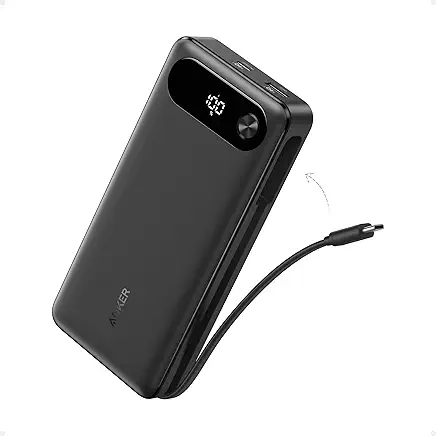
Why this matters: 4-5 full phone charges. Enough to keep communication alive for 3-4 days if you're conservative. USB-C fast charging means you can top up quickly when power returns.
Specs: 20,000mAh | Dual ports | LED indicator | Fits in pocket
🔗 View on Amazon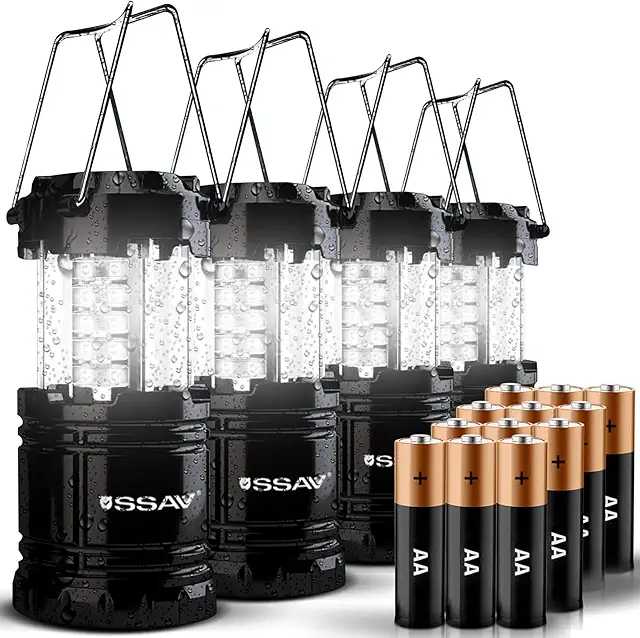
Why this matters: 90+ hours runtime on a set of batteries. Collapsible, so they store flat. Bright enough to light an entire room, but you can dim them to conserve.
Specs: 140 lumens | AA batteries (not included) | Collapsible | 4-pack
🔗 View on Amazon⚠️ Battery Reality Check:
You'll need AA batteries for the lanterns. Add $10-15 for a 24-pack of Duracell or Energizer. Yes, this pushes you slightly over $50, but it's non-negotiable—lanterns without batteries are paperweights.
💧 Tier 2: Water Storage & Purification ($45)
Rule of thumb: 1 gallon per person per day minimum. That's drinking, cooking, and basic hygiene. For 2 people over 3 days, you need 6 gallons stored + a way to purify more if needed.
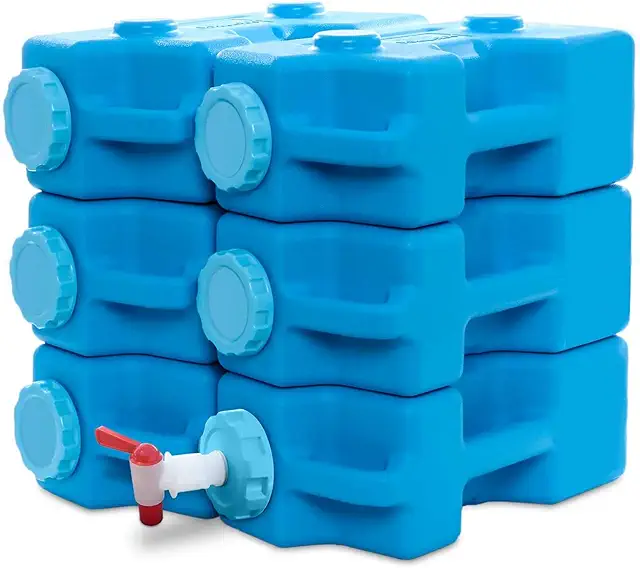
Why this matters: Stackable means they fit in closets, under beds, or behind furniture. BPA-free, food-grade. The handle makes them portable if you need to evacuate.
Specs: 7 gallons total | Stackable | Handle | 2-pack
🔗 View on Amazon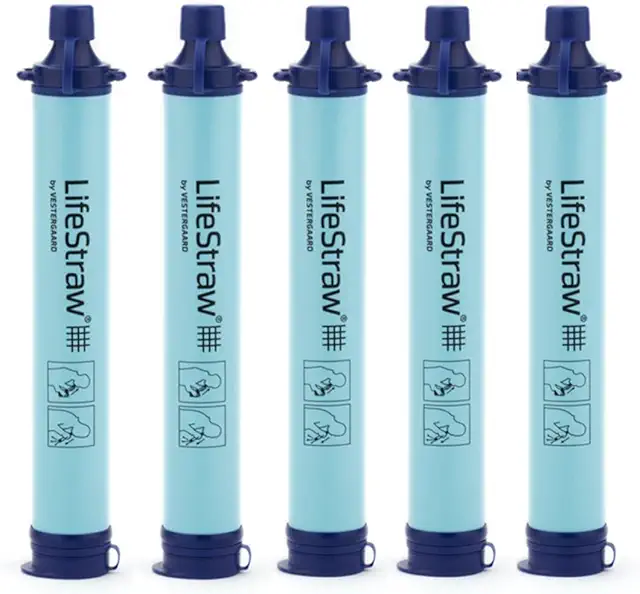
Why this matters: Filters 1,000 gallons. If your stored water runs out, you can purify from questionable sources (bathtub, rain collection, even puddles in emergencies).
Specs: Removes 99.9% bacteria/parasites | 1,000-gallon capacity | Lightweight
🔗 View on Amazon💡 Pro Tip: Fill your bathtub the moment you hear a storm/emergency warning. That's 40-60 gallons of backup water even if you didn't prep. Use a WaterBOB liner ($30) if you want to keep it sanitary.
🍝 Tier 3: Food & Cooking ($60)
Forget freeze-dried meals—they're expensive and require water you might not have. Focus on ready-to-eat, calorie-dense options that don't need prep.
Food ($40)
- Canned protein: Tuna, chicken, beans ($15 = ~12 cans)
- Peanut butter: High calories, long shelf life ($5 for 2 jars)
- Crackers/hardtack: Carbs for energy ($5)
- Trail mix/nuts: Portable, no-cook calories ($10)
- Energy bars: Clif, KIND, or similar ($5 for 6-pack)
⚠️ Rotation is key: Eat and replace these every 6-12 months. This isn't "doomsday food," it's normal groceries you're cycling through. No waste, no expired stockpiles.
Cooking ($20)
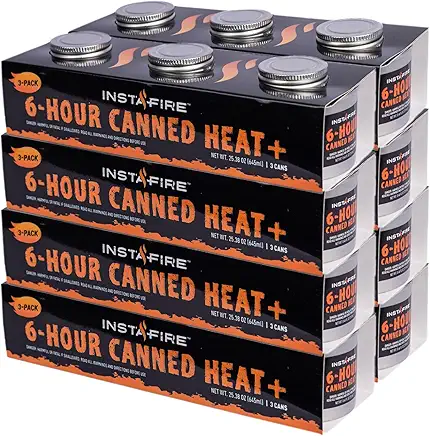
Why this matters: Apartment-safe. No open flame, minimal smoke. Each can burns for 2+ hours. Enough to heat water, warm canned food, or cook basic meals.
Specs: Burns 2+ hours each | Safe indoors (ventilate!) | 6-pack
🔗 View on AmazonNote: You'll need a camp stove or improvised stand to hold pots over Sterno. A $10 folding camp stove works, but in a pinch, you can use bricks or cans to elevate cookware.
📡 Tier 4: Communication ($25)
Cell towers fail. Wi-Fi dies. You need a way to get information and stay connected beyond your smartphone.
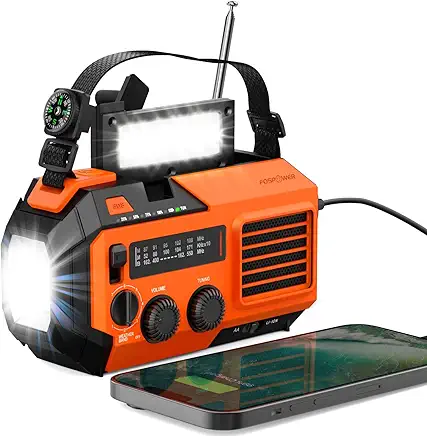
Why this matters: AM/FM/NOAA weather alerts. Solar + hand crank + battery means it works even when everything else fails. Bonus: USB port can charge your phone (slowly).
Specs: 3 power sources | Weather alerts | Phone charger | Flashlight
🔗 View on Amazon📱 Phone Strategy: With the Anker power bank + emergency radio backup, you can keep one phone alive for 5-7 days if you use airplane mode aggressively. Turn it on once per hour to check for signal.
To understand what a real extended grid-down event looks like—and how to prepare for one that lasts weeks, not days—Dark Reset covers grid infrastructure vulnerabilities, EMP preparedness, and the full recovery playbook for urban residents.
🛡️ Tier 5: Security & First Aid ($20)
In a 72-hour scenario, major injuries are unlikely, but minor cuts, burns, and headaches are guaranteed. Plus, you need basic security awareness.
First Aid ($15)
- Small first aid kit (bandages, gauze, antiseptic, pain relievers)
- Add: Imodium (diarrhea can kill you faster than hunger)
- Add: Benadryl (allergic reactions)
Security ($5)
- Door wedge: $5 rubber wedge makes forced entry much harder
- Alternative: Battery-powered door alarm ($10-15 if you can stretch budget)
⚠️ Home Security Reality: You can't fortify like a homeowner. Focus on deterrence and awareness. A loud alarm buys you time to call for help or barricade. That's usually enough.
The $200 System in Action
Scenario: It's 9pm on a Tuesday. Lightning hits a transformer. Power goes out city-wide. Your building has no backup generator. Here's what happens:
- Hour 1: You grab one of the LED lanterns from under the sink. Light the living room. Check phone: 80% battery. Turn on airplane mode. Use emergency radio to tune into local news.
- Day 1: Use stored water for drinking. Heat a can of soup on Sterno for dinner. Phone still at 75% thanks to airplane mode. Neighbors knock—you lend them a lantern, become the hero of your floor.
- Day 2: Water holding steady. Eat peanut butter crackers for breakfast, canned tuna for lunch. Charge phone with power bank at night (back to 100%). Radio says power restoration in 24-48 hours.
- Day 3: Power returns at 2pm. You still have 3 gallons of water, half your food, and 2 phone charges left in the power bank. You were never in danger.
✅ The difference: Your neighbors were eating melted ice cream by candlelight with dead phones, wondering when help would come. You were comfortable, informed, and in control.
Beyond $200: What to Add Next
Once you've built the foundation, here's how to upgrade:
$200 → $500 Upgrades
- Small solar generator ($200-250): Jackery 240 or similar. Powers laptops, CPAP, mini-fridge.
- More water storage ($30): Add 2 more WaterBricks (14 gallons total).
- Upgraded first aid ($20): Comprehensive trauma kit with tourniquets, Israeli bandages.
$500 → $1,000+ Upgrades
- Larger solar system ($400-600): Jackery 500 or EcoFlow River. Enough to run a mini-fridge and charge multiple devices.
- 30-day food supply ($100-150): Mix of canned goods + some freeze-dried meals.
- Portable water filtration ($50-100): Sawyer Mini or gravity filter for larger volumes.
- Security upgrades ($50-100): Better door alarms, window sensors, personal defense tools.
As you scale your prep beyond $200, the strategy gets more complex. For a city-specific framework covering apartment security, evacuation routes, neighborhood-level threats, and advanced urban preparedness protocols, Urban Survival Code is the most comprehensive urban-focused prep guide available.
Storage: Where Does All This Go?
I tested this entire system in a 600 sq ft home. Here's where it fits:
- Under the sink: 2 WaterBricks, cleaning supplies
- Closet shelf: Canned food, power bank, lanterns
- Bedroom closet floor: Additional water, radio
- Kitchen drawer: First aid, Sterno, door wedge
Total footprint: Less than 4 cubic feet. You won't even notice it's there until you need it.