Picture this: The power's been out for 36 hours. Your fridge is warming up. Your frozen food is thawing. You're hungry. Really hungry.
You pull out your camping stove, crack a window for ventilation, and—
BEEP. BEEP. BEEP.
Your smoke alarm goes off. Your neighbors start pounding on the walls. Your landlord texts: "Are you cooking with open flames? That's a lease violation."
Welcome to the urban prepper's dilemma: You need to eat, but you can't use fire.
This guide will show you exactly how to cook safely, legally, and effectively in an apartment during a power outage—without violating your lease, setting off alarms, or starving.
Why Apartments Ban Open Flames
Before we dive into solutions, let's understand the restrictions:
What most leases ban:
- Propane camp stoves
- Charcoal grills (even on balconies, often)
- Gas-powered cooking equipment
- Any "open flame" devices
- Fire risk in multi-unit buildings (one apartment fire can burn down the entire structure)
- Carbon monoxide poisoning (poor ventilation in enclosed spaces)
- Insurance liability (building policies exclude certain equipment)
- Building codes (especially high-rises and older buildings)
- No open flame (it's a controlled gel burn)
- Minimal smoke
- No carbon monoxide risk (when used properly)
- Each can burns 2-3 hours
- Legally sold for catering/food service
- Heat water (for coffee, tea, instant meals)
- Warm canned food (soup, chili, stew)
- Cook eggs, rice, pasta (slowly)
- Boil/simmer anything in a pot
- Open can, light the exposed gel surface
- Place on heat-safe surface (concrete, metal tray, stone)
- Use a pot stand or improvised platform (bricks, cans) to hold cookware above flame
- Crack a window for ventilation (minimal, but still necessary)
- Slow heat (not for high-temp searing)
- Burns through fuel (stock up)
- Still requires ventilation (crack a window)
- Zero emissions (completely safe indoors)
- No flames, no smoke, no alarms
- Can cook anything (boil, fry, sauté, simmer)
- Totally lease-compliant
- Electric hot plate: $20-40 (1,000-1,500W)
- Solar generator: Minimum 500Wh capacity (Jackery 500, EcoFlow River 2 Max)
- Cookware: Standard pots/pans
- 1,000W hot plate on low-medium heat
- ~30-45 minutes of cooking time per charge
- Enough to make 1-2 full meals
- Requires upfront investment in solar generator
- Limited runtime (need solar panels to recharge, or wait for power to return)
- Takes up space
- No flame, no electricity, no fuel
- Completely safe indoors
- Heats food to 100°F in 10-15 minutes
- Portable, lightweight, long shelf life
- MRE entrees
- Canned food (transferred to heater pouch)
- Pre-cooked meals in retort pouches
- Place food in heating pouch
- Add water to FRH packet
- Insert FRH into pouch, seal
- Wait 10-15 minutes
- Food is hot and ready
- Single-use (not reusable)
- Only heats food (doesn't cook raw ingredients)
- Requires small amount of water
- Free energy (sunlight)
- Zero emissions
- Can bake, roast, slow-cook
- Completely lease-compliant
- Baked goods (bread, muffins)
- Roasted vegetables
- Slow-cooked meats
- Rice, beans, casseroles
- Solar oven: $50-200 (GoSun, All-American Sun Oven)
- Balcony, patio, or window with direct sunlight
- Dark cookware (absorbs heat better)
- Place food in dark pot/pan
- Put pot in solar oven, close lid
- Aim reflectors at sun
- Wait 1-3 hours (depends on sun intensity)
- Requires sunlight (doesn't work at night or cloudy days)
- Slow cooking times
- Need outdoor access (balcony, patio, or large window)
- Zero equipment needed
- Zero risk
- Zero skill required
- Canned food (tuna, chicken, beans) eaten cold
- Peanut butter + crackers
- Trail mix, nuts, dried fruit
- Energy bars (Clif, RxBar, KIND)
- Jerky (beef, turkey, salmon)
- Pre-cooked vacuum-sealed meals (GOOD TO-GO, Heather's Choice)
- Bread, tortillas, wraps (pair with canned protein)
- Can get boring (morale matters)
- Less satisfying than hot meals
- Doesn't work for all food types (frozen meat thawing, perishables)
- Sterno 6-pack ($20)
- Pot/pan + utensils (you probably already have these)
- 3 days of no-cook food ($40-60)
- Sterno 12-pack ($35)
- Flameless ration heaters (10-pack) ($15)
- 5 days of mixed food (canned, no-cook, MREs) ($80-100)
- Cookware: Pot, pan, utensils, plates, cups ($20-30)
- Solar generator (500Wh+) ($250-400)
- Electric hot plate ($30-40)
- Sterno backup ($35)
- 7-14 days of food ($100-150)
- Solar oven (optional) ($50-200)
- Canned goods: Stack vertically, rotate by expiration date
- Dry goods: Rice, pasta, beans in airtight containers
- Energy bars: In a "snack drawer" mixed with normal snacks
- Bulk storage bins: Stackable plastic bins labeled "emergency food"
- MREs / freeze-dried meals: Lightweight, compact, long shelf life
- Flat bins: Canned food, water bottles, low-profile storage
- Deep storage: Items you won't touch for 6-12 months
- Freeze-dried meals (Mountain House, GOOD TO-GO)
- MREs
- Rice (white rice, stored properly)
- Honey (literally never expires)
- Salt, sugar, spices
- Canned goods (meat, beans, vegetables, soup)
- Peanut butter (unopened)
- Crackers (sealed packages)
- Pasta (dried, stored in airtight containers)
- Energy bars
- Nuts, trail mix
- Jerky
- Granola
- Instant coffee/tea
- Buy → Store → Eat → Replace
- Use the oldest items first ("first in, first out")
- Check expiration dates every 3-6 months
- No waste, always fresh
- 6-9 cans of protein (tuna, chicken, beans)
- 2 jars peanut butter
- 12 energy bars
- Trail mix / nuts
- Crackers / bread
- 25-30 cans of food
- 2-4 jars peanut butter
- 20-30 energy bars
- Rice, pasta (with cooking method)
- Dried fruit, nuts, jerky
- 100-150 cans of food
- Freeze-dried meals (10-20 pouches)
- 10-20 lbs rice/pasta
- Bulk staples (flour, sugar, oil)
- Spices (morale matters)
- ✅ Crack a window (minimal ventilation needed)
- ✅ Use on heat-resistant surface (stone, metal, concrete)
- ✅ Keep away from flammable materials (curtains, paper)
- ✅ Extinguish fully after use (seal can or smother flame)
- ❌ Don't leave unattended
- ❌ Don't use in completely sealed rooms
- ✅ Place on stable, heat-resistant surface
- ✅ Keep away from water (avoid shorts/fire)
- ✅ Monitor closely (can overheat if left on too long)
- ❌ Don't exceed your solar generator's wattage limit
- ✅ Use in ventilated area (chemical reaction produces steam)
- ✅ Place on heat-resistant surface
- ❌ Don't touch during activation (gets very hot)
- ❌ Don't seal completely (steam needs to escape)
- ✅ Have a fire extinguisher nearby ($20-40, worth it)
- ✅ Smoke detector with fresh batteries
- ✅ Know your escape routes
- ❌ Never cook while intoxicated or sleep-deprived
- Breakfast: Eggs (hot plate or Sterno) + toast
- Lunch: Sandwiches with deli meat (eat before it spoils)
- Dinner: Pasta with canned sauce (Sterno or hot plate)
- Breakfast: Oatmeal (instant, hot water from Sterno)
- Lunch: Canned tuna + crackers
- Dinner: Canned chili or soup (heated on Sterno)
- Breakfast: Energy bars + peanut butter
- Lunch: MRE or cold canned food
- Dinner: Rice + canned beans (Sterno or hot plate)
Why they ban them:
The reality: These rules aren't designed to stop you from prepping. They're designed to stop you from killing yourself and your neighbors.
So let's work within them.
The Apartment-Safe Cooking Arsenal
Here are the methods that WON'T violate your lease, trigger alarms, or produce dangerous fumes:
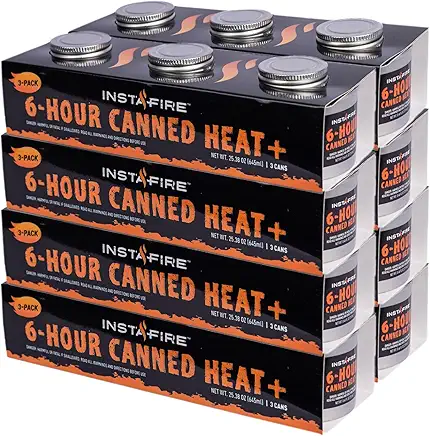
Method 1: Sterno Canned Heat (The MVP)
What it is: Jellied alcohol fuel in a can. Burns cleanly, produces minimal smoke, safe for indoor use with ventilation.
Why it works:
What you can cook:
How to use it:
Cost: ~$20 for a 6-pack (12-18 hours of cooking time)
Limitations:
Verdict: Best all-around solution for apartment cooking in emergencies.
Method 2: Electric Hot Plates (Solar Generator Required)
What it is: Single or double-burner electric cooktop powered by a solar generator or battery bank.
Why it works:
What you need:
What you can cook: Literally anything. Boil pasta, fry eggs, make rice, heat soup, cook meat. If you can do it on a stove, you can do it on a hot plate.
Runtime example (Jackery 500):
Cost: $250-400 (hot plate + solar generator)
Limitations:
Verdict: Best long-term solution if you can afford the solar generator. Unlimited versatility, zero risk.
Method 3: Flameless Ration Heaters (FRH)
What it is: Chemical heating packs that activate with water. Used by military (MREs) and campers.
Why it works:
What you can cook:
How to use it:
Cost: ~$1-2 per heater (buy in bulk)
Limitations:
Verdict: Great backup for ready-to-eat meals. Not ideal for cooking from scratch.
Method 4: Solar Ovens (Balcony/Window Required)
What it is: Reflective box that concentrates sunlight to cook food. No fuel, no power, no flames.
Why it works:
What you can cook:
What you need:
How to use it:
Cost: $50-200 (one-time purchase)
Limitations:
Verdict: Excellent for daytime cooking if you have balcony access. Not a primary method, but great supplemental option.
Method 5: Cold Meals / No-Cook Foods
What it is: Eating food that doesn't require cooking at all.
Why it works:
What you can eat:
Pro tip: Most canned food is pre-cooked. You don't NEED to heat it—it's just more palatable warm.
Cost: ~$50-100 for a 3-day supply (2 people)
Limitations:
Verdict: Simplest solution for short-term emergencies (24-48 hours). Pair with a hot cooking method for longer outages.
Building Your Apartment Cooking Kit
Here's a complete setup that covers all scenarios:
Tier 1: Bare Minimum ($60-80)
What you can do: Heat water, warm canned food, eat cold meals.
Tier 2: Comfortable ($150-200)
What you can do: Cook hot meals, heat multiple dishes, more variety.
Tier 3: Full System ($300-500)
What you can do: Cook anything, anytime, for extended periods.
Food Storage Strategy for Small Spaces
You can cook all you want, but if you don't have food stored, it's pointless.
Where to store food in a 600 sq ft apartment:
#### Kitchen Cabinets
#### Closet
#### Under Bed
#### Pantry (if you have one)
What to store (prioritized by shelf life):
#### Tier 1: 10-30 year shelf life
#### Tier 2: 2-5 year shelf life
#### Tier 3: 6-12 month shelf life
Rotation strategy:
How much food to store:
Minimum (3 days, 1 person):
Total: ~2,000-2,500 calories/day × 3 days = 6,000-7,500 calories
Comfortable (7 days, 2 people):
Extended (30 days, 2 people):
Cooking Safety: Don't Die Trying to Eat
Even with apartment-safe methods, you need to follow safety protocols:
Sterno Safety
Electric Hot Plate Safety
FRH Safety
General Rules
What to Cook: 7-Day Emergency Menu
Here's a realistic meal plan using apartment-safe cooking methods:
Day 1-2: Fresh/Perishable Food First
Day 3-4: Transition to Canned/Shelf-Stable
Day 5-7: Full Emergency Mode
Snacks throughout: Trail mix, nuts, jerky, dried fruit
Final Thoughts: You Won't Starve
Here's the truth: In a 72-hour power outage, you're not going to starve. You're not even going to get that hungry.
But you WILL get uncomfortable. You WILL crave hot food. You WILL want coffee.
And that's where this guide comes in.
You don't need a full kitchen. You don't need propane. You don't need to violate your lease.
You need Sterno, a pot, and a plan.
And if you want to understand what a week-long or month-long grid outage actually looks like—and how to plan food and power beyond 72 hours—Dark Reset is the comprehensive resource on extended grid-down events, including emergency cooking strategies when food storage runs low.
Build your cooking kit today. Store some food. Practice using your gear.
Because when the power goes out, you want to be the person heating soup on Sterno while your neighbors eat cold cereal in the dark.
For a full urban preparedness framework—evacuation planning, apartment security, water backup, and more—Urban Survival Code takes apartment dwellers from zero to fully prepared with city-specific protocols.
---
Want a printable cooking kit checklist? Get it free here
RECOMMENDED GEAR
As an Amazon Associate, we earn from qualifying purchases.